Confeere
Today, we’re talking to one of the freshest names in the portuguese contemporary art scene: Confeere. With a distinctive identity and an instantly recognisable visual language, he has been building a repertoire of iconic works that are hard to miss. You know those giant sculptures that keep popping up on your feed and make you stop scrolling? That’s his work. Today, we’re getting to know the artist behind those pieces, exploring what inspires him and taking a closer look at the world of Confeere.
Who is the person behind the artist Confeere?
It’s difficult to separate the two, but I’d say that even before Confeere, I was already a determined and ambitious person, with a real hunger for life. Some things came later, through growth and maturity - experiences that were part of my personal development and ultimately shaped my growth as an artist as well.
What did you want to be when you were a kid?
I’ve always drawn and been creative since I was a child, so I simply wanted to do what I enjoyed. I never had a specific idea of what I wanted to be, partly because I wasn’t really aware of what I could become. I think I’ve always had more of a mindset of doing what I love, whatever that might be.
How does one of your pieces usually begin?
All of my work starts with a thought and the ambition to see an idea brought to life. I think that’s what drives me to create: thinking and rethinking an idea until I reach something that I feel has the potential to work, for whatever reason.
Then I get that feeling of, “It would be so sick to see this in real life.” And that’s when the click happens - like, “Yaaaa, I have to make this.”
Tattoos have played an important role in your journey. Is that where it all began?
No, actually, that’s not where it started. For me, tattooing is more of a tool that I can use to express myself, but it wasn’t where everything began. If I’m being honest, and I think about where it really started, it goes all the way back to when I was a kid. At every school I went to, I’d spend my days drawing. Later on, I got into graffiti, and I think graffiti was a major turning point because that’s when I became more conscious of what I was doing and started wanting to improve.
Graffiti led me to discover different places and meet different people, which made me think about what I could do beyond graffiti. That’s when tattooing came into the picture. It’s still important to me to this day because it also gives me a certain financial security, which allows me to feel free to pursue the other things I love doing.
Your pieces are heavily influenced by the use of discarded materials and unconventional media. Where do you source these materials, and how do you choose what to work with?
Nowadays, I have a large stock of different textile materials that people have given me over the years. In the beginning, I would steal a few towels from my mother’s house, use clothes I no longer wore, things like that. Whenever I needed a specific colour that I couldn’t find at home, I would buy materials at fabric markets and similar stores.
These days, I have a huge amount of material that has come to me through people who follow my work. People collect bags and bags of clothes, bed sheets, ties, towels - in all kinds of colours and shapes - and bring them to me.
Is sustainability something you consciously consider in your work, or did it naturally emerge from your creative process?
I think it was really a case of one thing leading to another. When I started, even before I was Confeere I was already creating small sculptures and things like that, reusing different materials such as flower pots, small juice cartons, etc. It was simply because I wanted to make things but didn’t have the specific materials I needed to do so.
I think things developed in a similar way later on. I wanted to make the acrylic paintings I was creating more tangible. I wanted them to be more than just paint on a canvas, and that’s how I started using textiles. They were something that was close at hand, with lots of different colours and textures.
Sustainability wasn’t a conscious concern at first. But once I realised that the work itself was touching on those ideas, it gave even more strength and intention to what I do today.
Your aesthetic is deeply connected to the world of “Sports Life”. Where does this fascination come from?
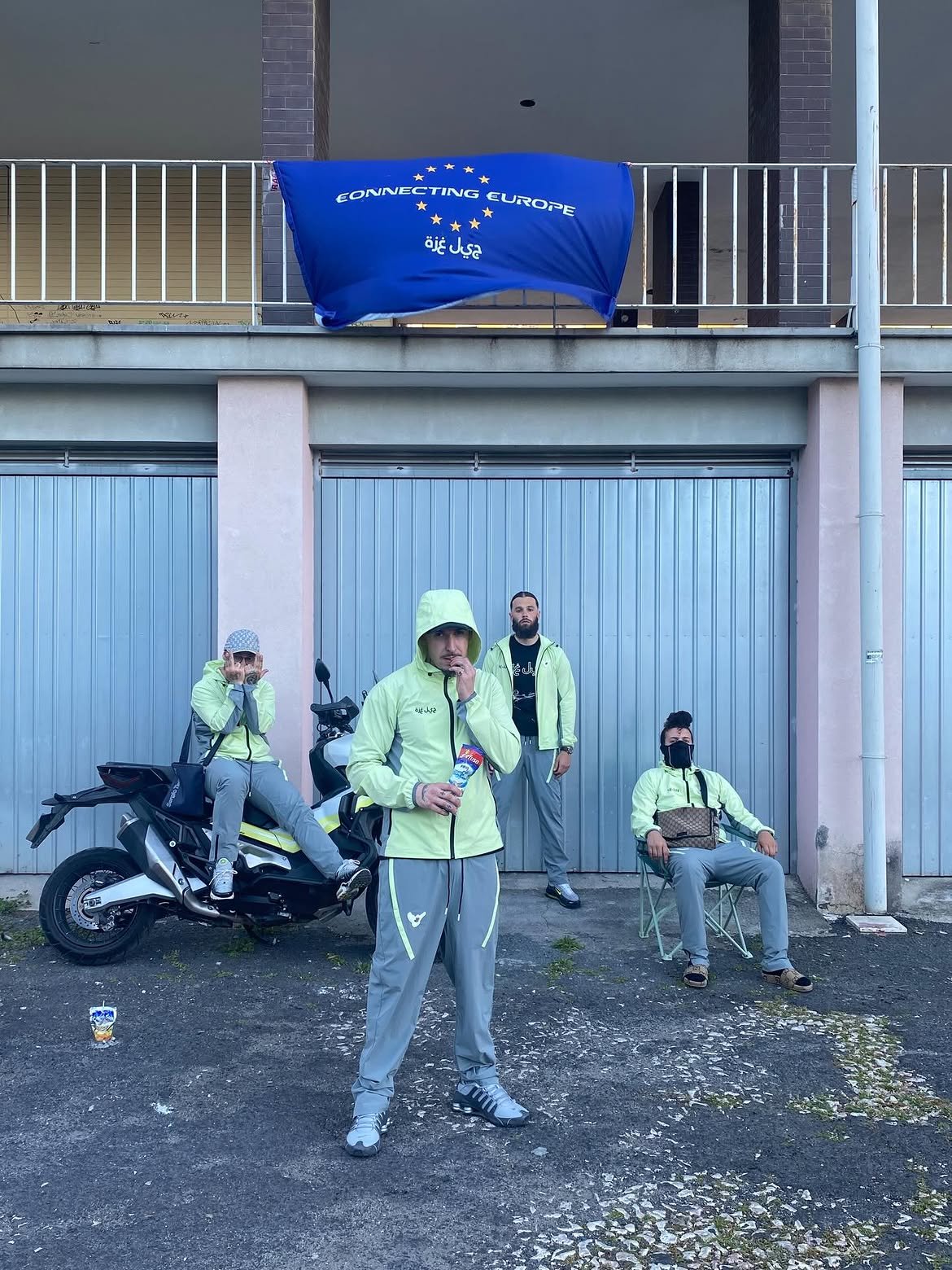
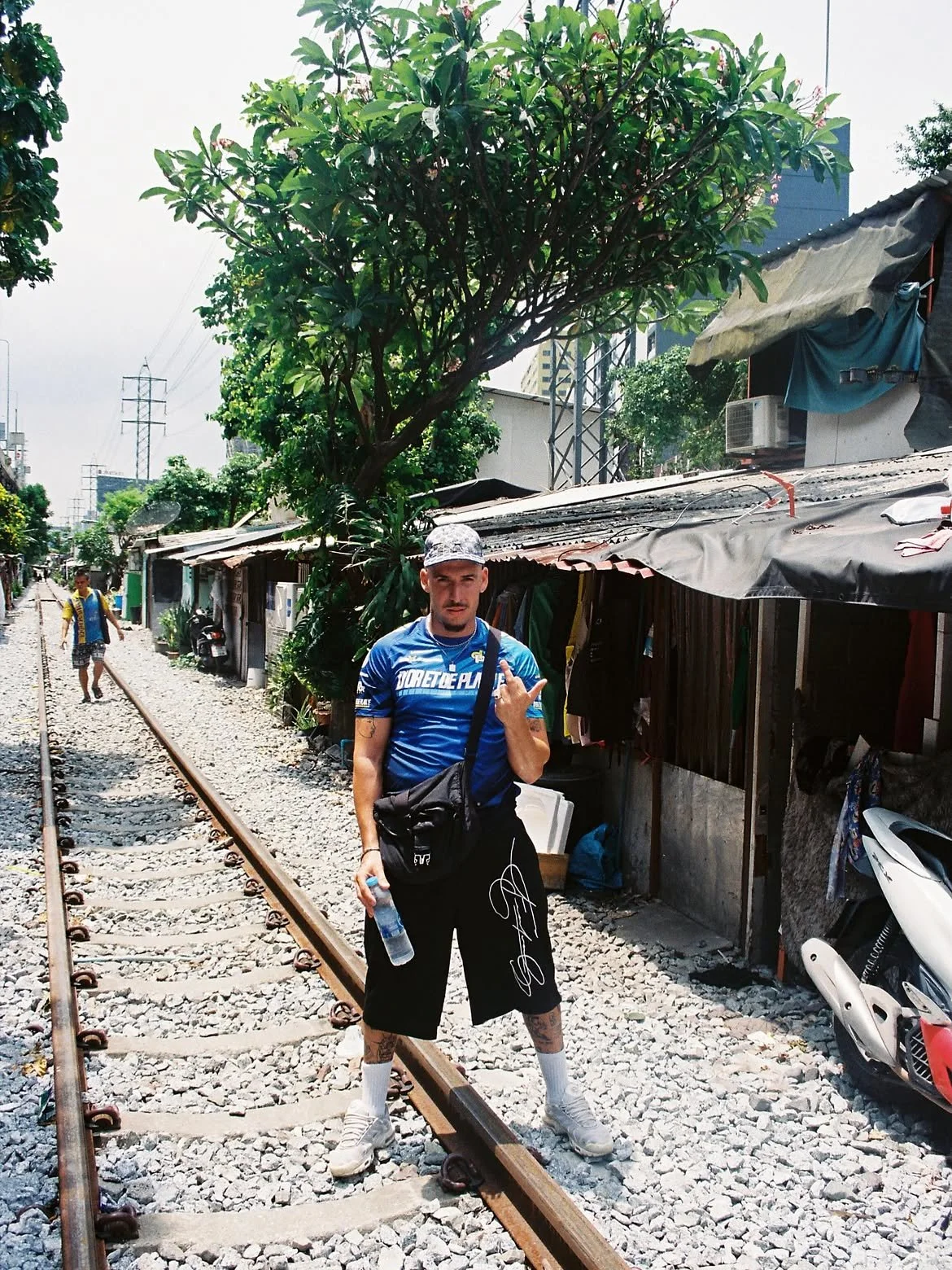
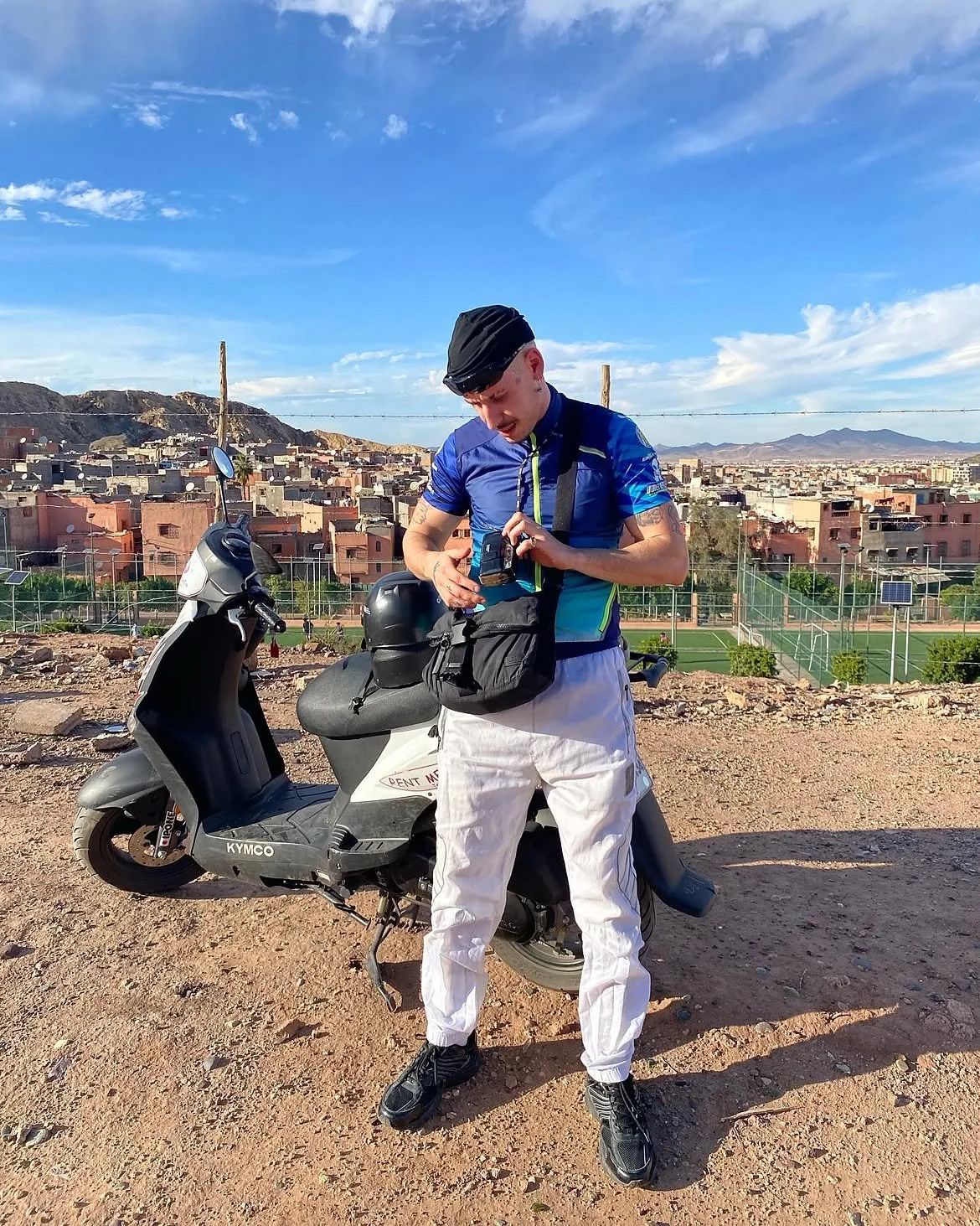
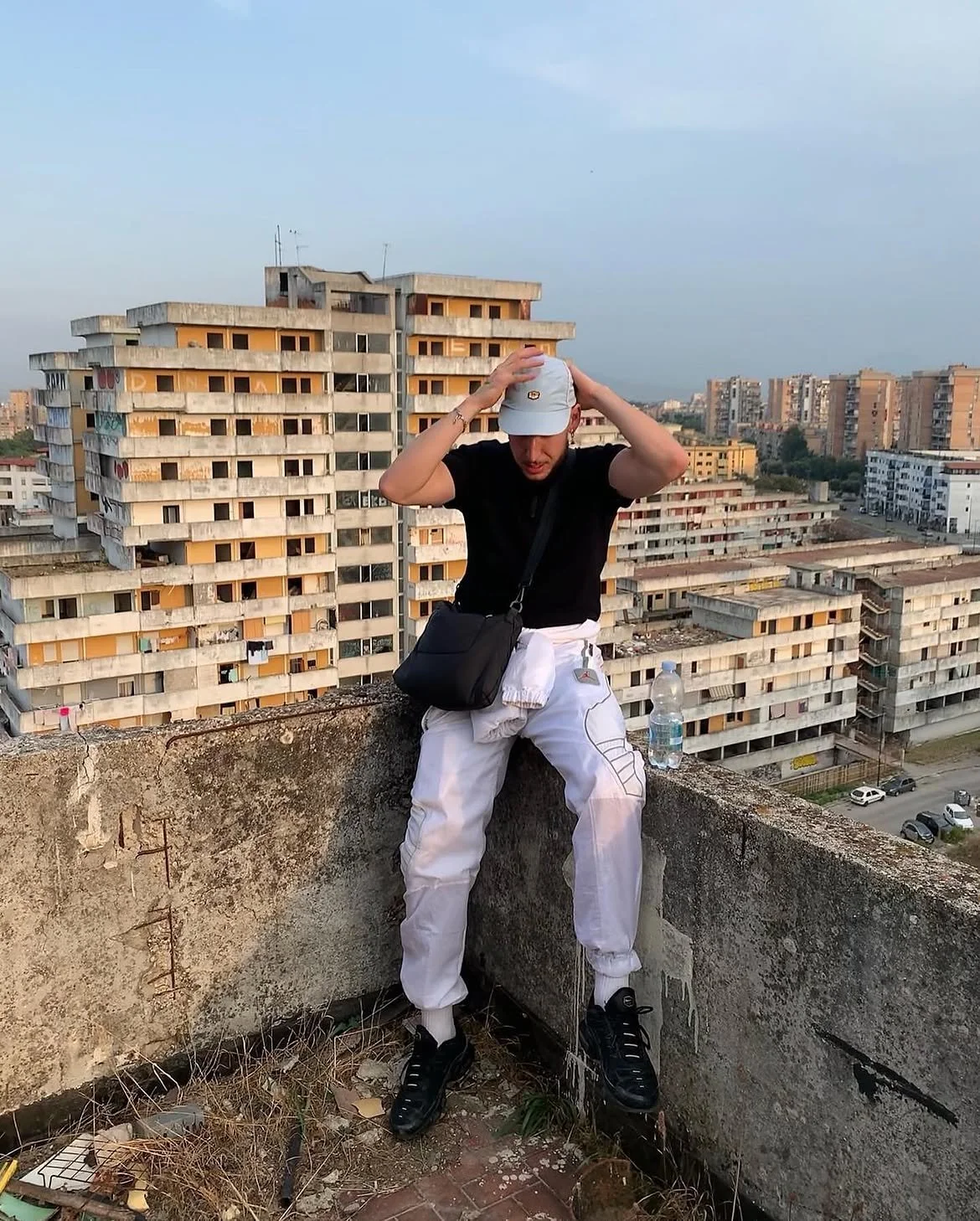
These are things that came naturally. They’ve been connected to my lifestyle ever since I started making some money and travelling. For years, I travelled all over Europe doing graffiti, constantly moving from one city to another and exploring them from the train lines to the rooftops - from London and Paris to Belgrade in Serbia, Cairo in Egypt, and so on.
I never felt like I was travelling in search of holidays. I was looking for different experiences. There was no rest, nor any desire to rest. Naturally, I ended up identifying with people who live in the same way, regardless of the field they’re in. So I wouldn’t really call it a fascination. It was simply my life unfolding.
You use “Street Runner” as one of your nicknames. What does that name mean to you?
That name came about during the period I mentioned earlier. It was a time when I couldn’t stay still - I was constantly moving from city to city, street to street. I would travel abroad to tattoo, meet people, make money, paint and explore different cities, without too much fear or many filters. That name, that aka, ended up coming from my lifestyle. It happened very naturally as well.
Marseille seems to hold a special place in your universe. What is it about the city that inspires you so much?
It’s actually not the city I’ve been to the most, but it is special to me, especially musically. I wanted to see with my own eyes the places where some of my favourite French rap songs were recorded and made.
Ever since I started exploring French music more deeply, around 2016/2017, Marseille fascinated me in a way. I was drawn to the love Marseillais have for their own city, and to the style that had already developed there at the time, which felt completely different from anywhere else.
That strong sense of identity was a huge part of what made me want to discover more. There was so much music that, when I first came across it, felt “strange,” but has since become completely mainstream. At the time, compared to the kind of music coming out of Portugal, the UK and the US, it was even considered somewhat “tacky” because the beats weren’t what people were used to hearing, and the artists weren’t these polished industry machines - perfectly styled, perfectly dressed and carefully presented.
That whole aesthetic created a sense of unfamiliarity, and that ended up being the key thing that made such a strong impression on me. So, when I talk about what inspires me about Marseille, it’s really more about the things that came out of the city - the musical styles and other forms of culture that were developed there. For me, there’s something really interesting about trying to understand where those things came from.
You’ve created work for some major brands and high-profile projects. Among collaborations with brands like Lacoste, Nike and Foot Locker, was there one that held a particularly special meaning for you?
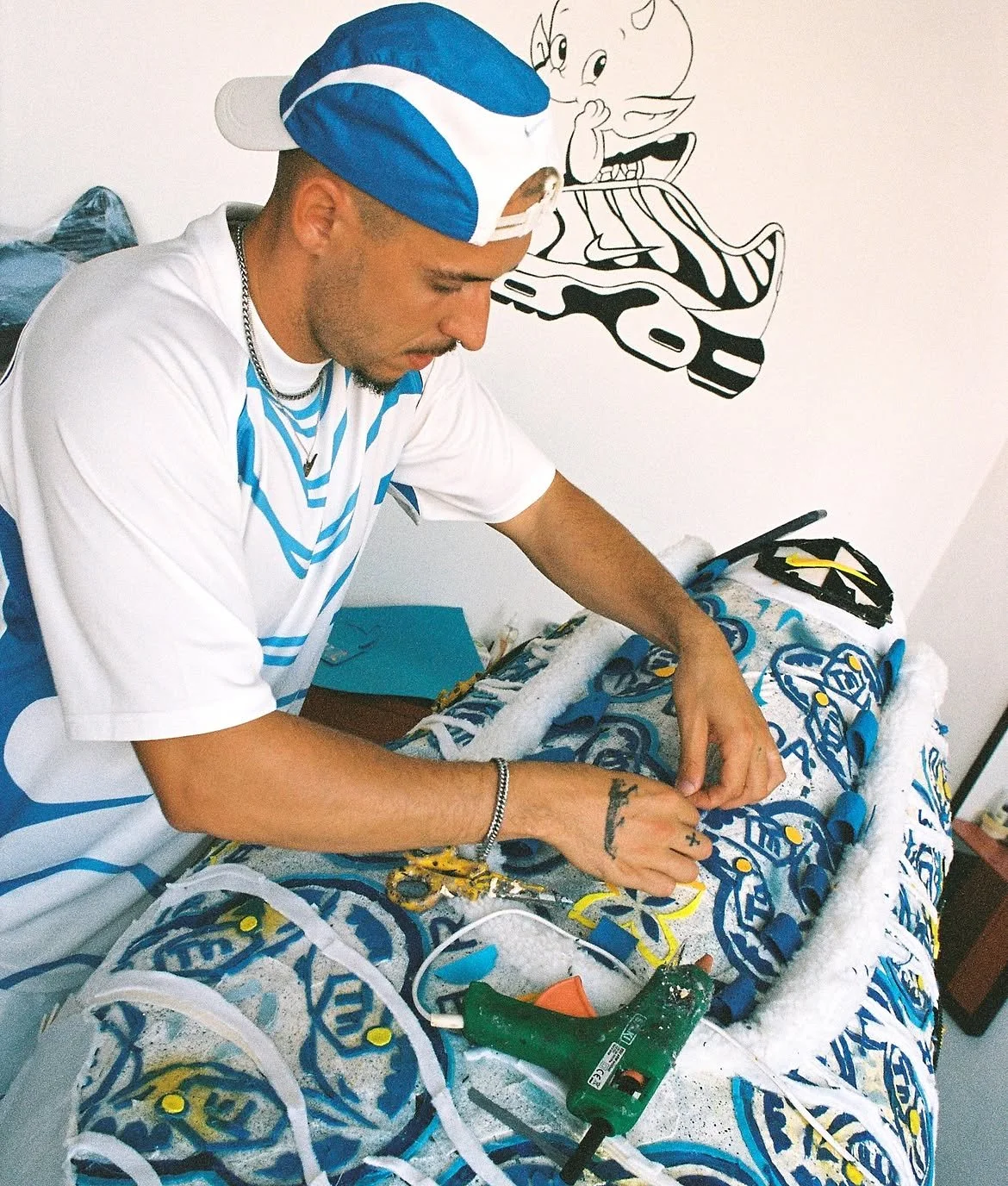
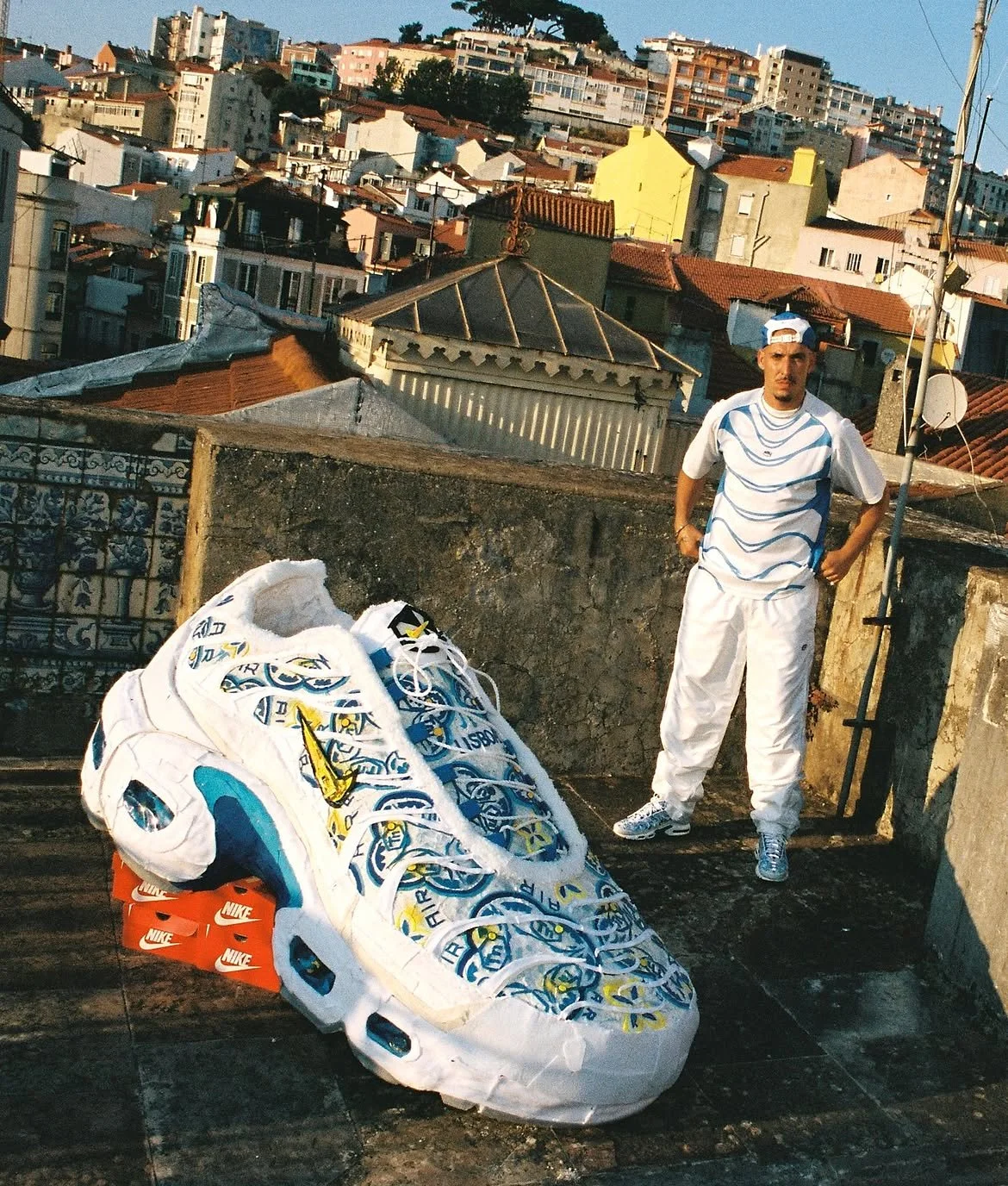
I think working with Lacoste at the time, and getting the chance to go to Paris once again through that project, was definitely a memorable moment in my journey. I also really enjoyed recreating the Nike TN Lisboa sculpture because it was in my own city, and I felt that it made sense for me to be the one doing it.
I’d also like to take this opportunity to thank the people at Contracoutura, because they were the ones who made it happen here.


One of your best-known works is the sculpture you created to commemorate the 25th of April at Marquês de Pombal. How did this project come about, and what did it mean to you to see your work in such an iconic location?
It came from the desire to create something impactful and meaningful - something with a power that went beyond its beauty. At the time, I had this specific idea of raising the bar for myself, and part of that came from wanting to work with new people who shared the same drive, vision and ambition as me.
With that desire to involve more people in my creative process, Gonçalo Afonso and Pedro Dordio naturally came into the picture. We had already talked several times about wanting to create something together, and this felt like the right moment.
When we first started meeting, we didn’t really know exactly what we were going to make. I shared my ideas with them, and they gave me incredibly important input that helped turn those ideas into something more developed and impactful. Through those conversations -sharing ideas and the desire to create something different simply for the love of doing it - the idea came about to create a piece of my own, connected to one of the most important days in our history. So this piece isn’t just mine. I developed it together with them, which is why I see it as an artistic object that belongs equally to the three of us.
As for the concept behind it, that came together as we talked about what we wanted to represent and how we could connect one of my ideas to the significance of April 25th. In a way, my work already carries several symbols of struggle and freedom, so that connection felt quite natural.


Over the years, your work has been showcased in very different spaces across Portugal, from Crack Kids to Underdogs Gallery. Is there a particular space or setting where you’d love to see your work?
Actually, although I’ve worked with Underdogs in specific contexts, I’ve never had an exhibition at the gallery itself. Here in Portugal, it’s definitely something I’d like to do, because it’s a space I visited a lot during my transition from adolescence into adulthood. It played a big part in my relationship with urban art within a gallery setting.
When it comes to dreaming about where I’d like to see my work exhibited, I don’t really feel like I have any limits. I’m an ambitious person with a lot of drive, so there are countless spaces where I’d love to see my work.
I can say that, from what I’ve experienced so far, exhibiting at Collab Gallery was an incredible experience. It allowed me to really see and feel what professionalism looks like. I saw my work being taken so seriously, at a level I don’t think I had ever experienced before.
Your XXL sculptures are probably some of the works most closely associated with your practice. How does a sculpture like this come to life, from the initial idea to the final piece?
They’re also probably the pieces that give me the most pleasure to make and to see completed. It’s that contrast of seeing something huge in an unexpected place that makes me want to create them. Over the years, these works have gone through different phases and ways of being made, but nowadays the process starts with an idea, followed by a project of what the final piece will look like.
Sometimes that project is nothing more than a photo I take on my phone of a friend, or a photo someone takes of me in a certain position. From there, we start designing a structure within that shape. These days, I work with two sculptors, Cria Design Studio, who help me a lot with the structural side of the process - from welding the structure to assembling it in public spaces.
Working with them also allows me to focus more on the creative and aesthetic side. I always follow the structural process until we reach the stage of adding polyurethane foam, which I then start carving with an X-Acto knife.
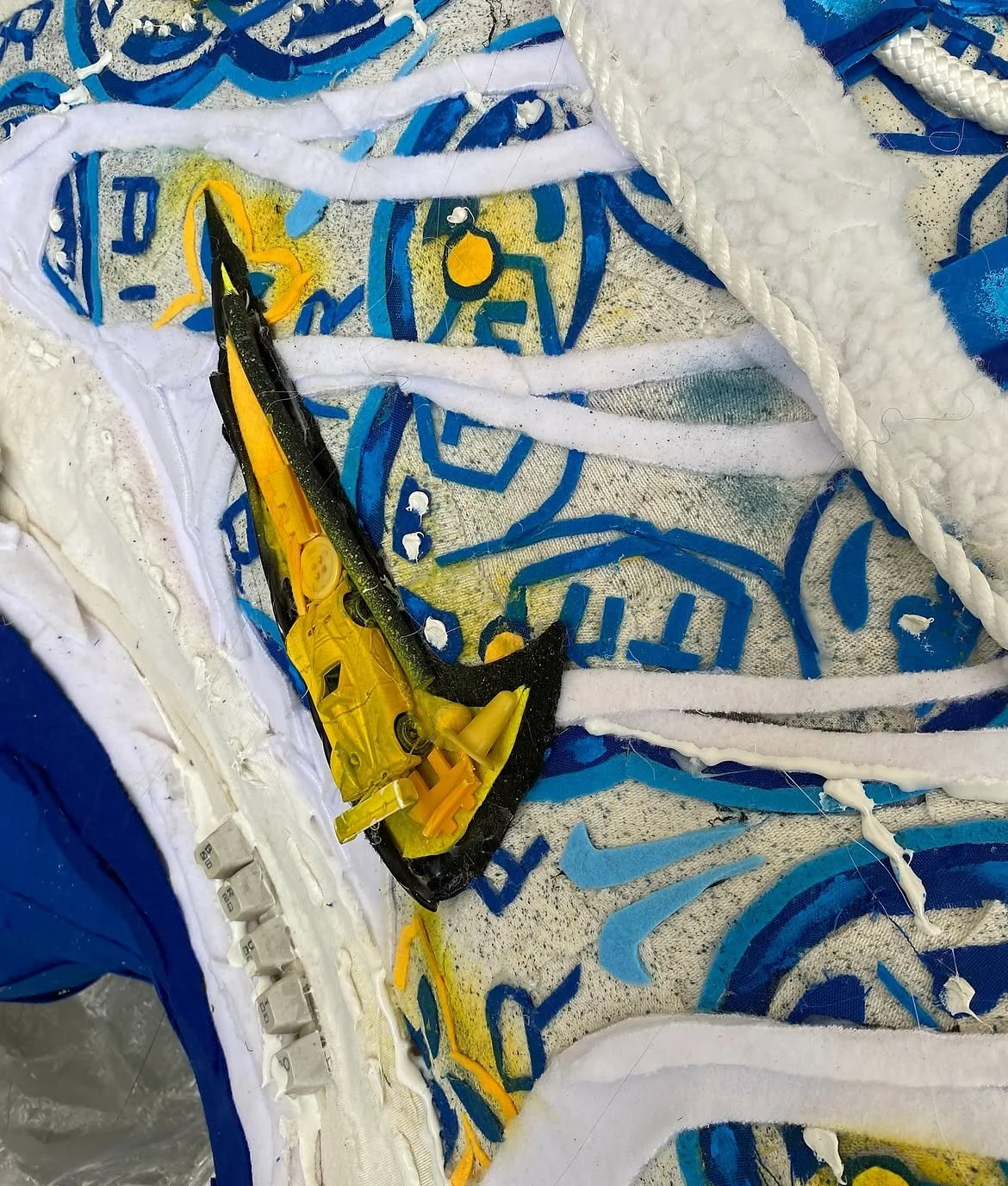
Once I achieve the shape I’m looking for, I start covering the entire sculpture with the textile waste. Most of the time, textile waste alone is used to recreate everything - the clothes, details like hands and faces, sneakers, and so on. But nowadays, since I want the pieces to be more durable when they’re placed outdoors, after the textile covering stage I add a strong layer of waterproof paint and spray.


Making a living from art in Portugal is still a challenge. What is it like being a visual artist in Portugal today?
It is what it is… it’s a constant challenge The truth is, I’ve always prioritised doing what I love, and I’ve genuinely always done that. Obviously, there have been highs and lows, but even during the lowest points, I thought about everything I had already been through and experienced, always coming back to the fact that I was doing what I love. That mindset, together with my desire to create, is what keeps me going. Obviously, as the years go by, the things we want start to change, and naturally my approach evolves with them. But that’s a sign of growth.
To sum it up, being an artist in Portugal isn’t easy, and that’s nothing new. It depends on many different factors if you want to stay true to yourself and make a living from what you love. You have to be tough to maintain that mindset and ambition through all the ups and downs.
I also think it depends a lot on what you want from life as a person. There are so many artists in Portugal who don’t make a living from their art, so I think it really comes down to each person’s perspective on what they do.
And what’s next? Do you have any upcoming projects in the works?
There are always projects in the works - this is simply my life. There will always be something coming up.
A positive message to our community :)
Just keep being Brutos as long as we have love and health, we’ll chase everything else. BRUTOS.