Orlem
The first of the year is with Orlem, a Porto-based brand. Boldly thinking outside the box, Orlem brings a breath of fresh air and a unique identity to the portuguese scene. With an artistic, hands-on approach, it stands apart from the rest. Today, we take a closer look at how it all began and where they hope to go next.
How would you define Orlem, and how did the project come to life?
For now, it is a clothing brand, but behind the scenes I see Orlem as a creative organization, given its bigger ambitions for the future of the project and the fact that one of its pillars is interaction with other artistic mediums.
From an early age I developed a passion for fashion and art in general, and through conversations with friends and skate sessions around 2016, sketches and more concrete ideas began to emerge. I was deeply involved in streetwear culture in 2017, and at that time it was difficult to find brands and clothing within that space in Portugal. It was from this context that the first Orlem t-shirts appeared, produced in small quantities and sold to family members, friends, and schoolmates. Even in that first collection, concept already played an important role, serving as a structural foundation for the design.
Since then, I have taken full control of the project, which has evolved in parallel with my personal journey, going through different phases while always maintaining a focus on organic creations with expression - pieces that aim to bring a breath of fresh air to fashion and to the community.
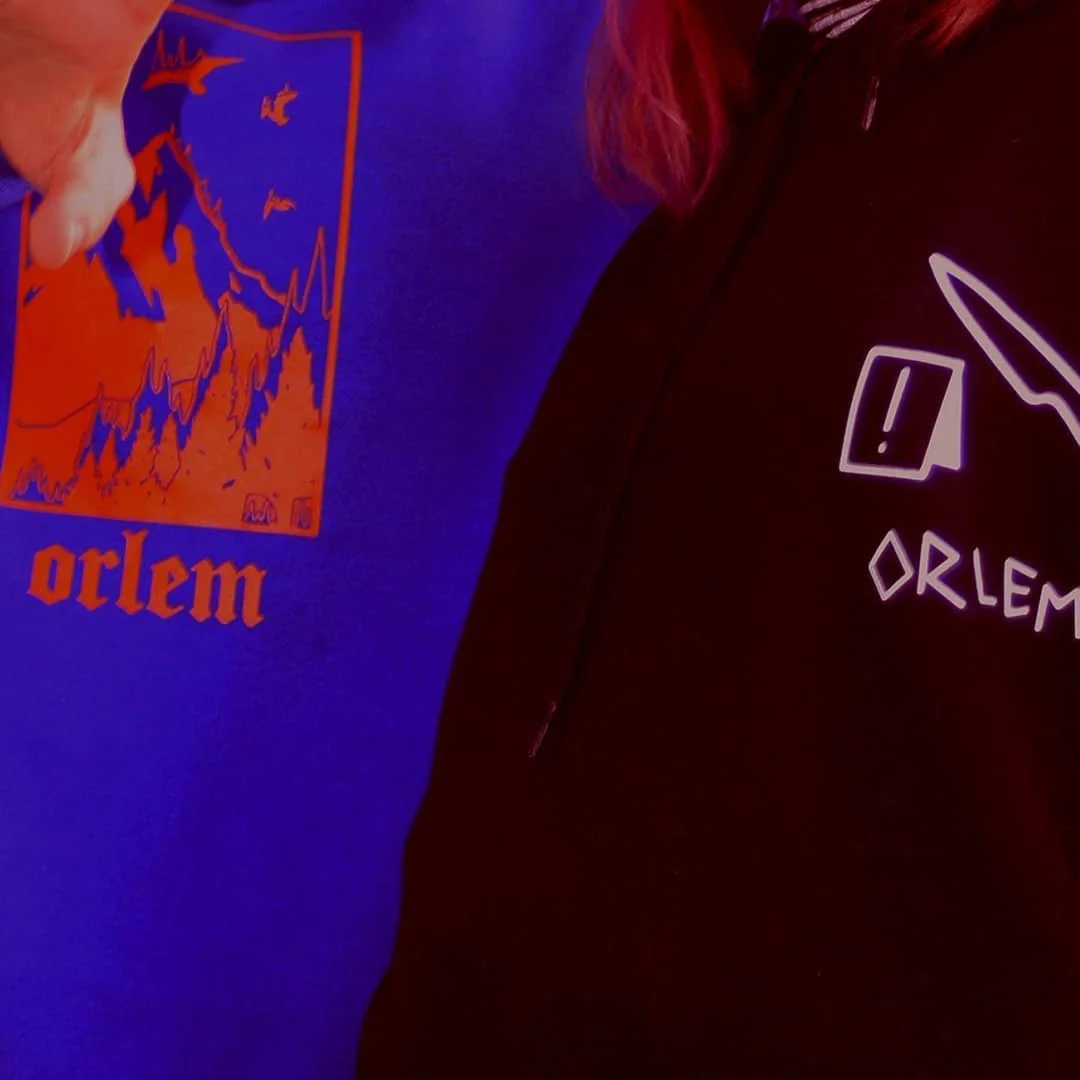
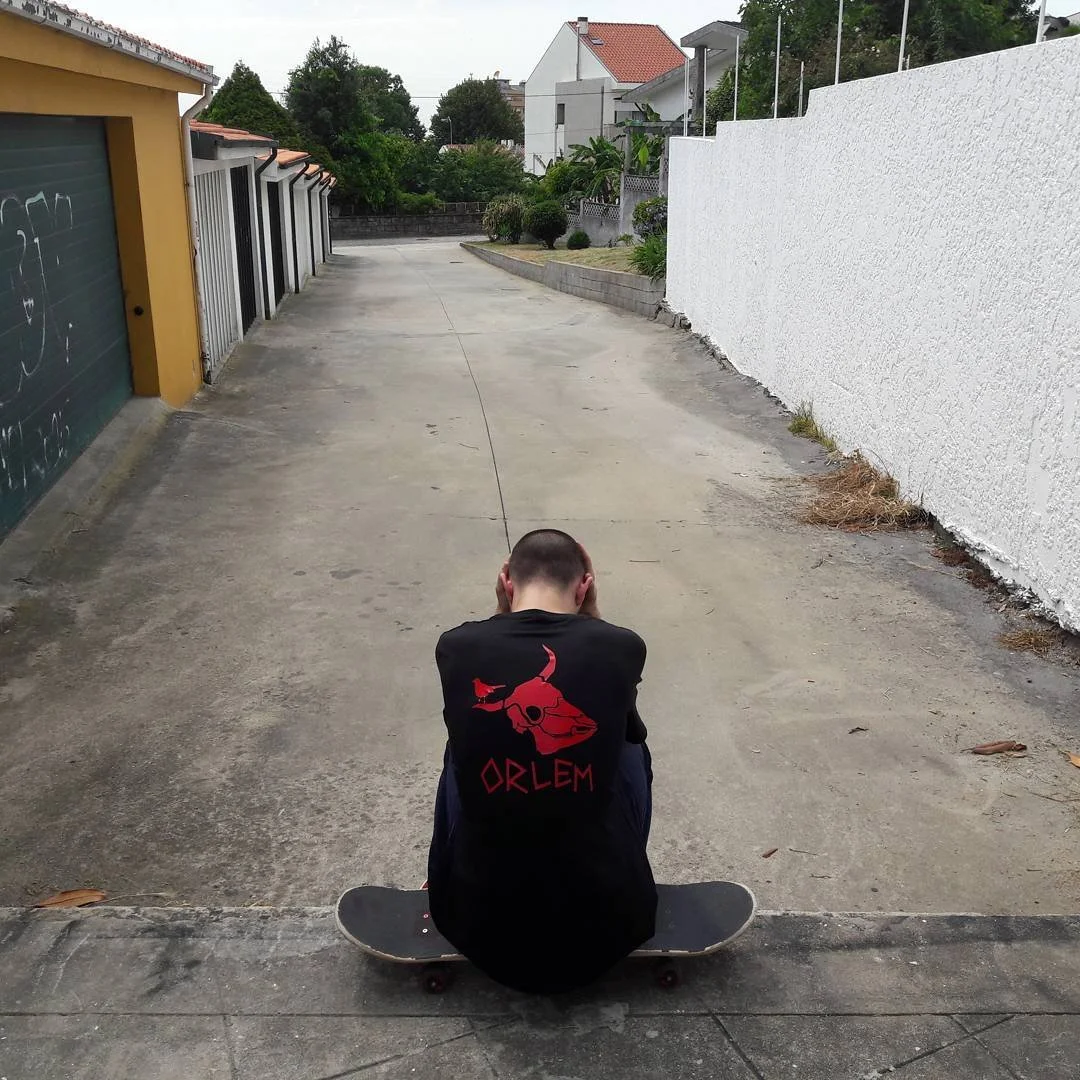
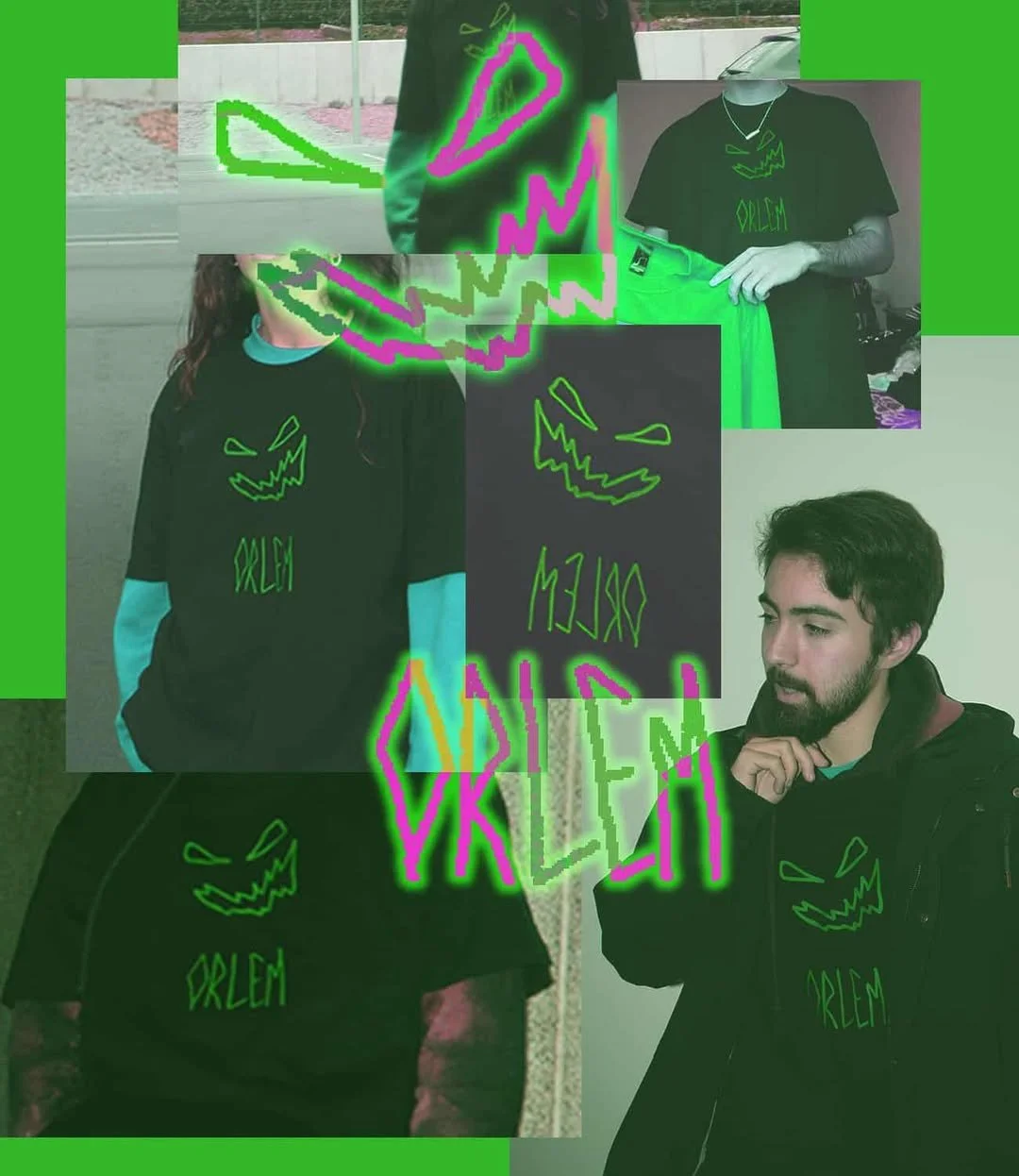
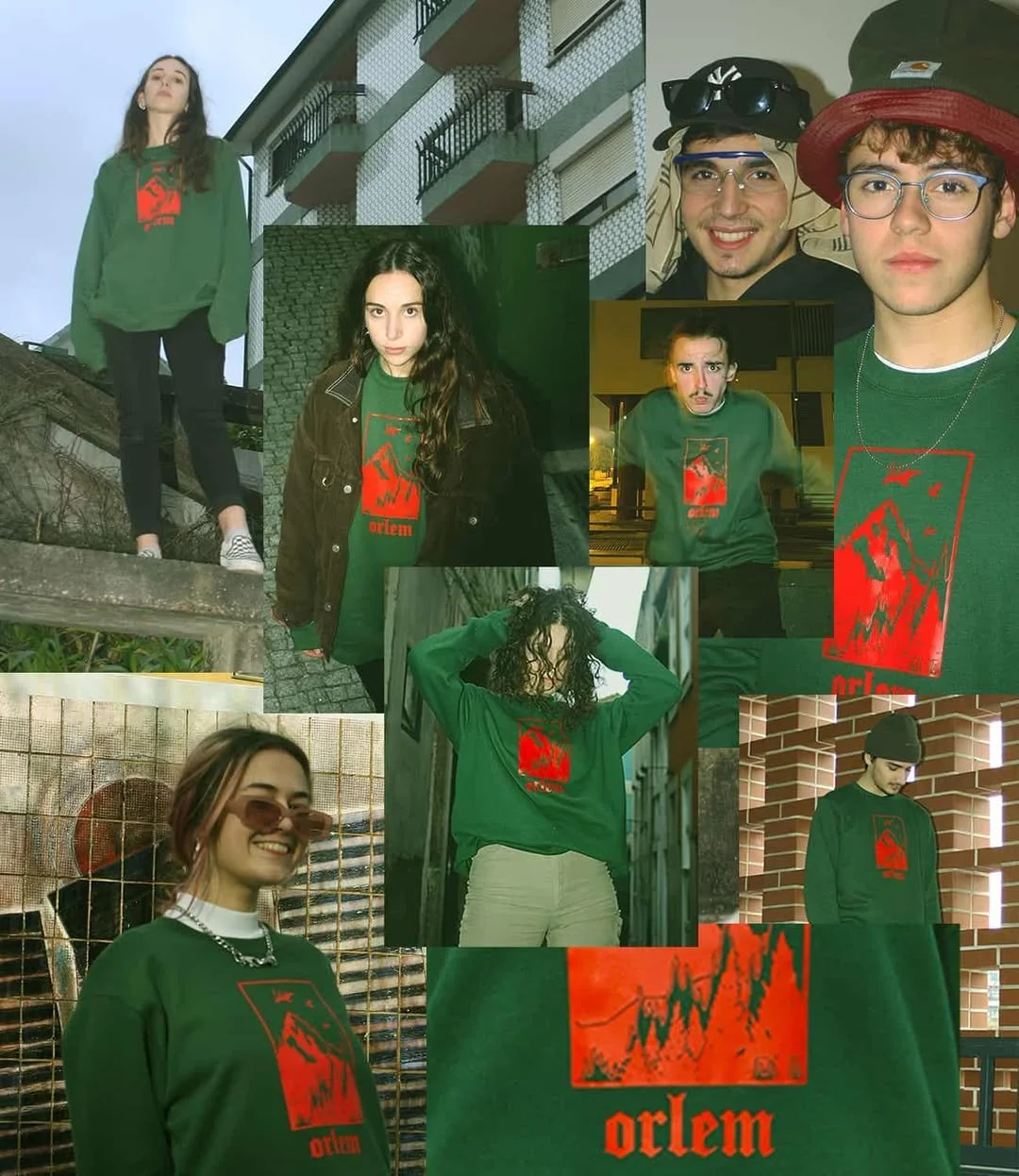
The artistic element is very present in your pieces. Do you have a background in the arts, or did this connection develop more intuitively?
I have always been a creative and expressive person, but aside from watercolor classes as a child, I never had any formal training in the creative field.
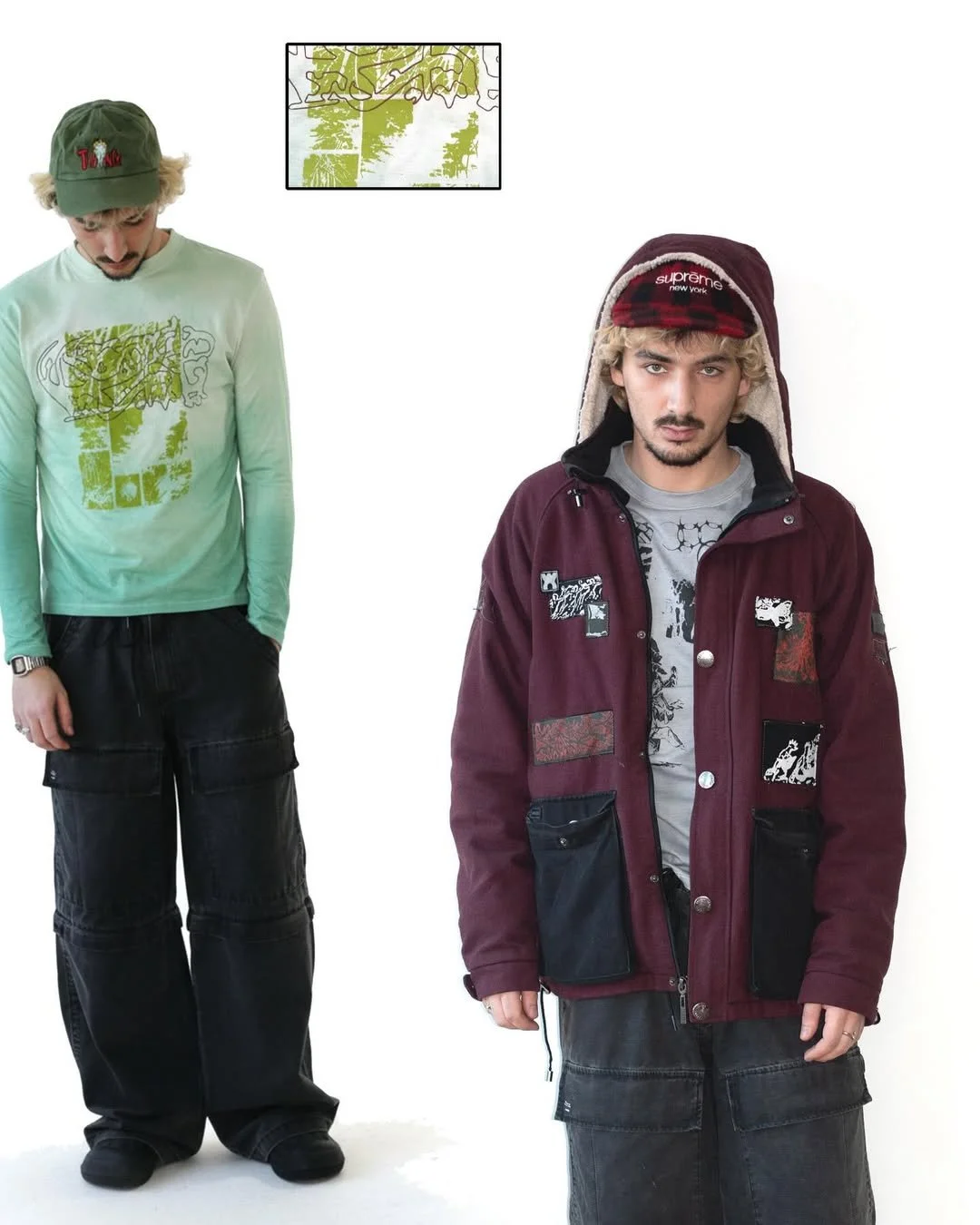
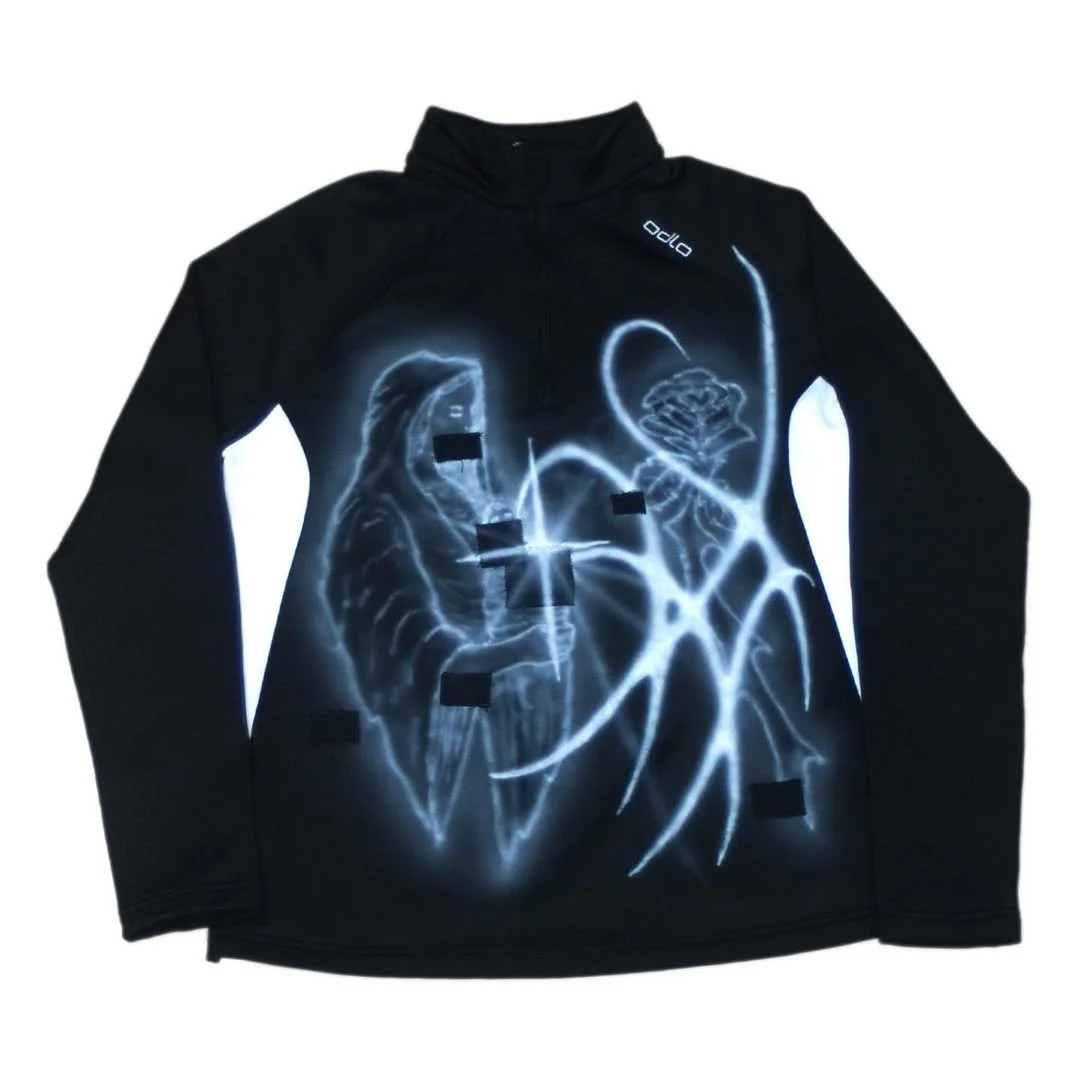
The artistic imprint visible in Orlem pieces emerged largely from the need to find ways to create. For example, in the early stages it was easier to paint garments using bleach than to produce 200 t-shirts in a factory. The designs of the first manufactured pieces were also simpler and more geometric, since—without experience in drawing or digital editing—the challenge was to translate the concept I had in mind using only the basic tools of Photoshop.
By staying closely involved in this process, I began discovering and experimenting with new tools, gradually expanding the range of possibilities for each creation. Before I realized it, making clothes had become my main vehicle for artistic expression, and today I can say that I have drawn and painted more on fabric than on paper or canvas.
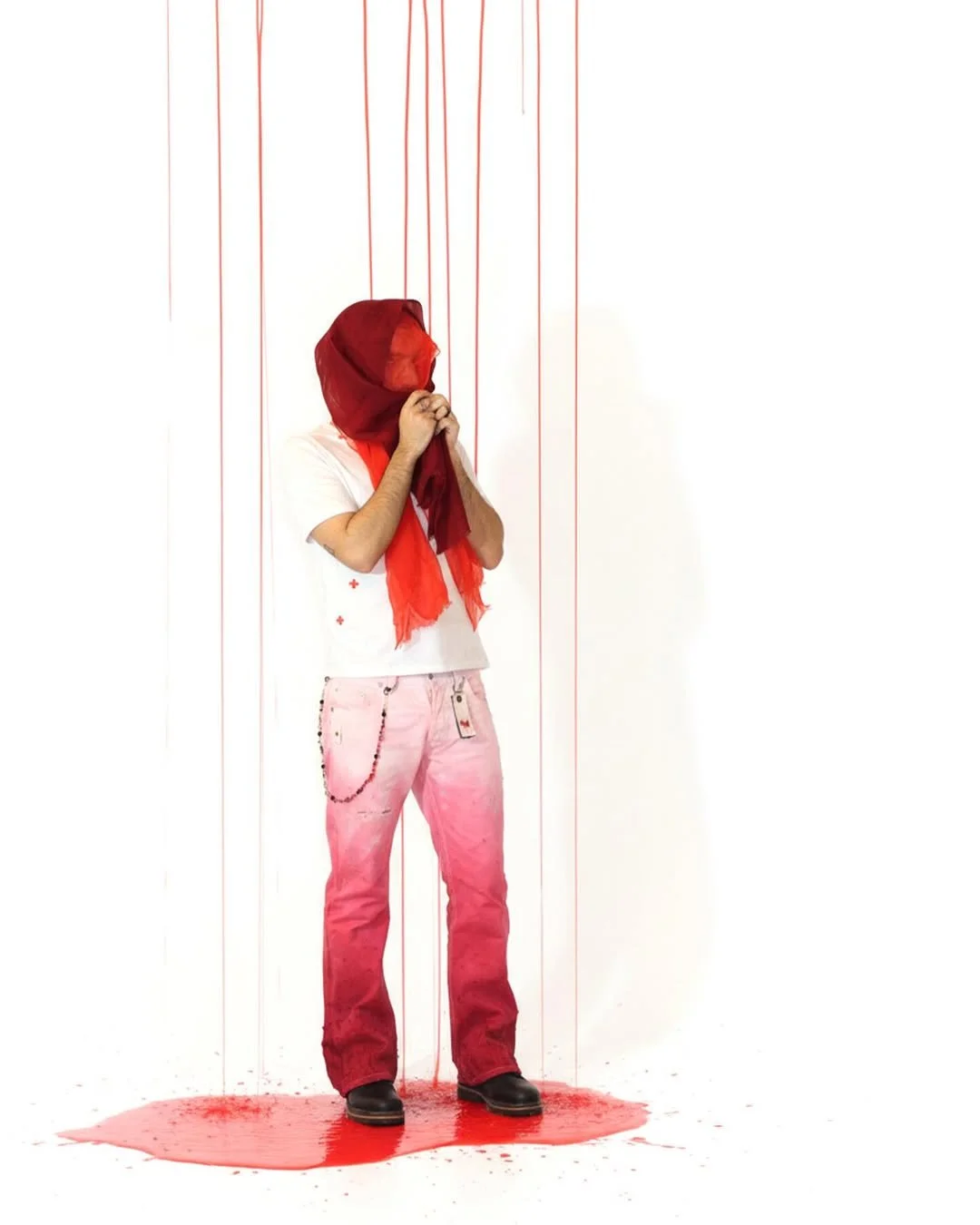


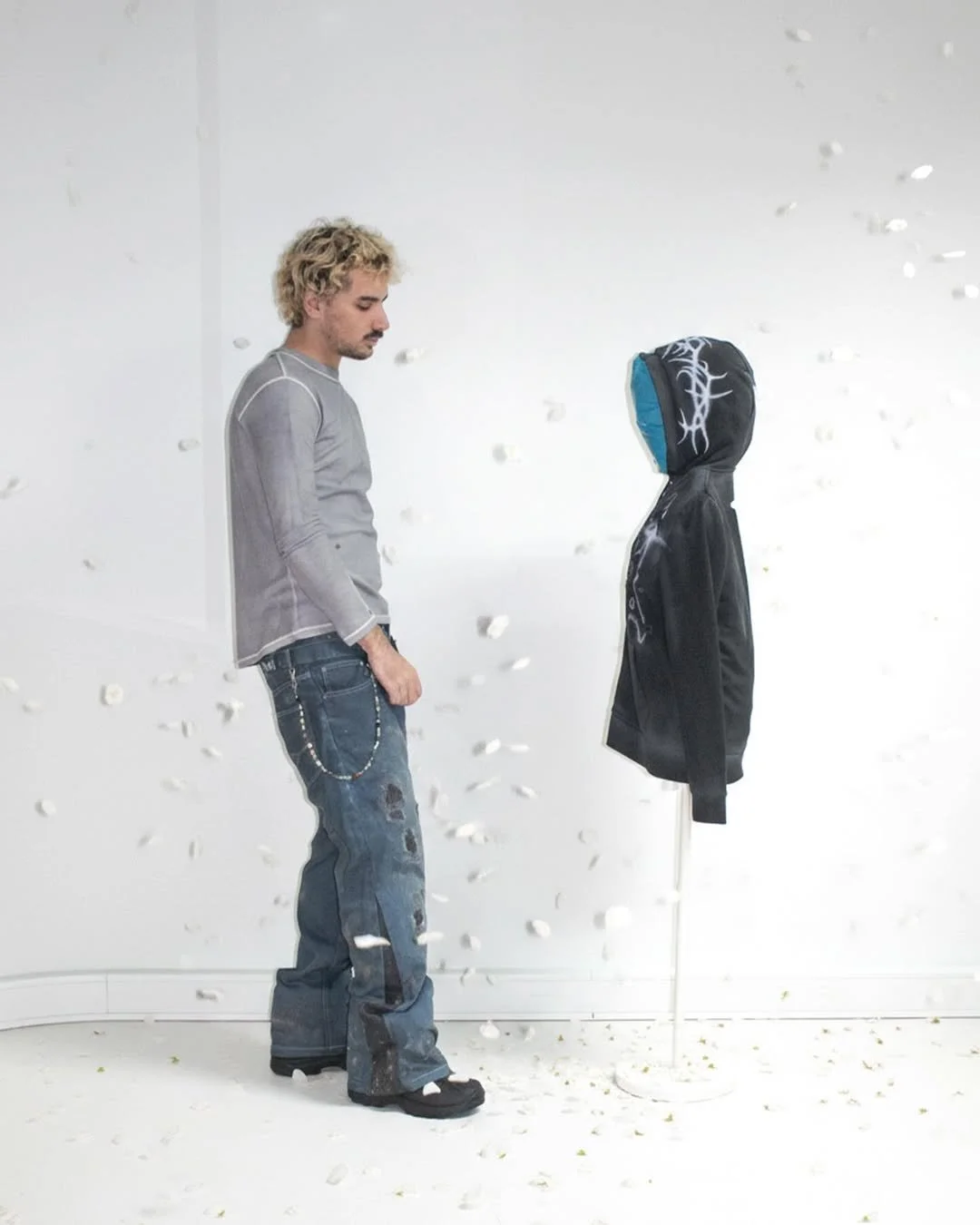
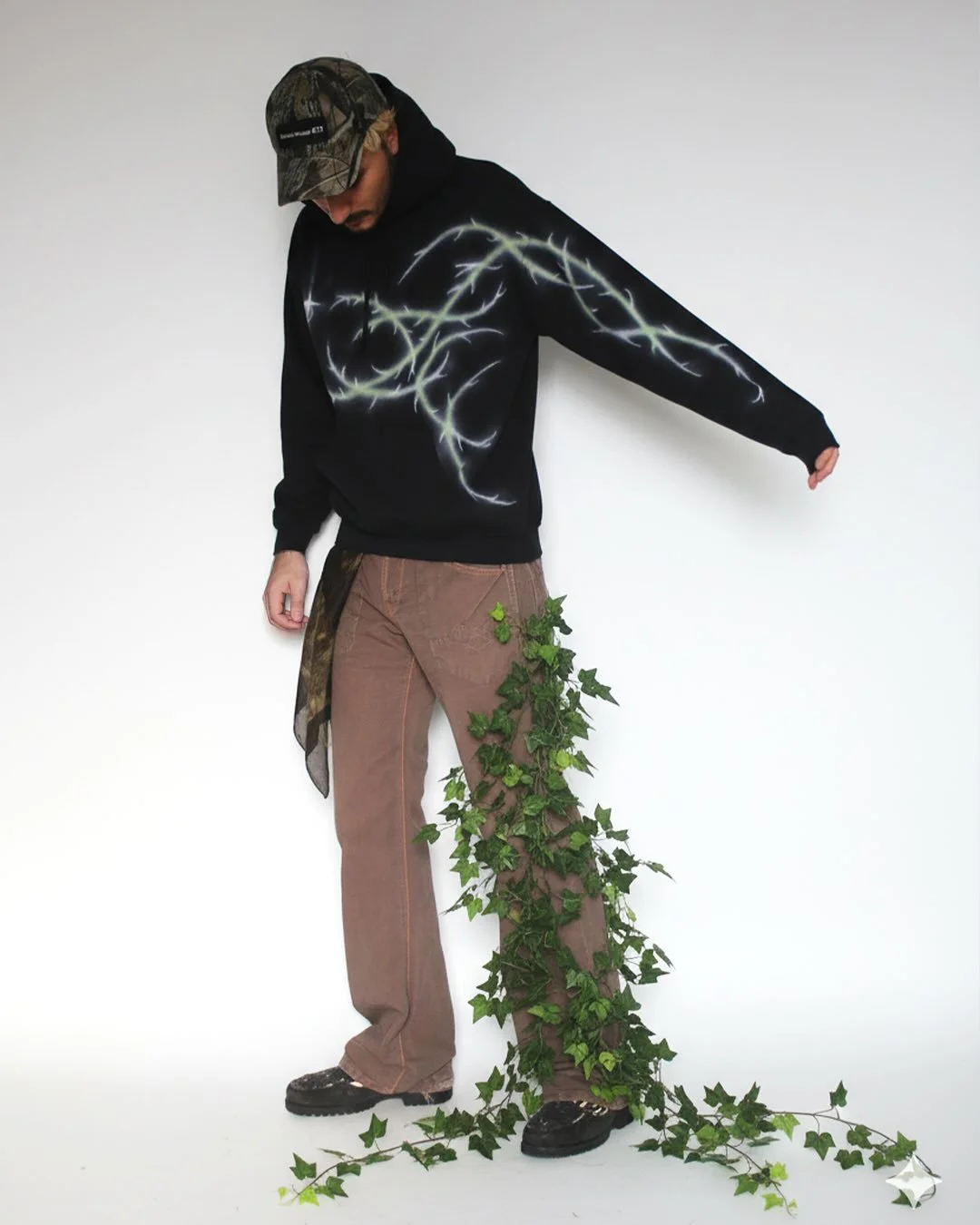
Your language is very distinctive - from design to communication and photography. How did you build this identity?
Once again, necessity was the mother of invention. From the very beginning, the lack of resources pushed me to look for solutions. If I didn’t have a photography studio or a camera, I had to come up with striking edits that could elevate less professional photos. If there was a printer in my mother’s office, I looked for ways to incorporate scanning into my content.
It’s common to see a lack of resources as an obstacle, but it can also be an opportunity to create something unique using the tools we already have.
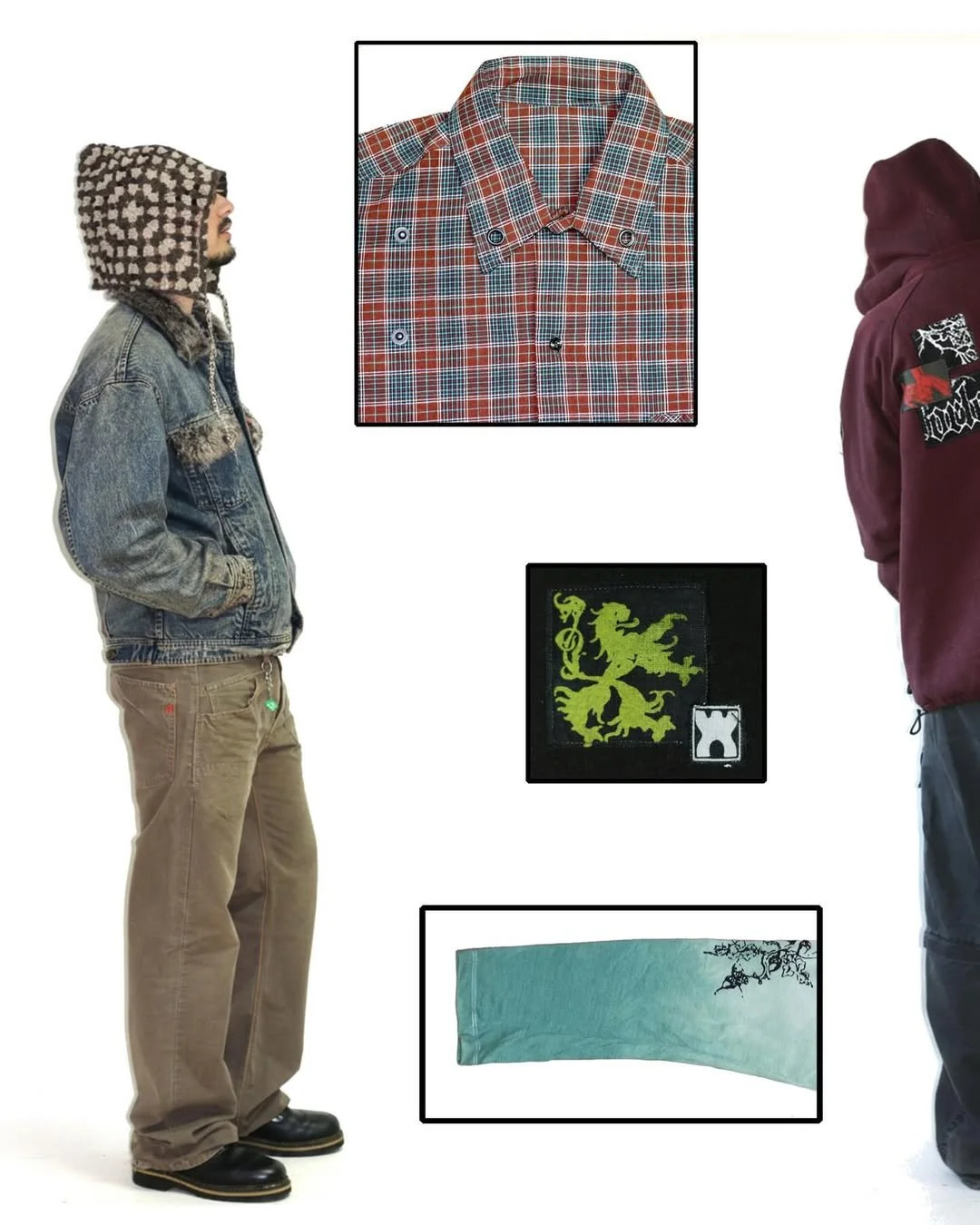
How do you go about selecting the pieces you choose to work on?
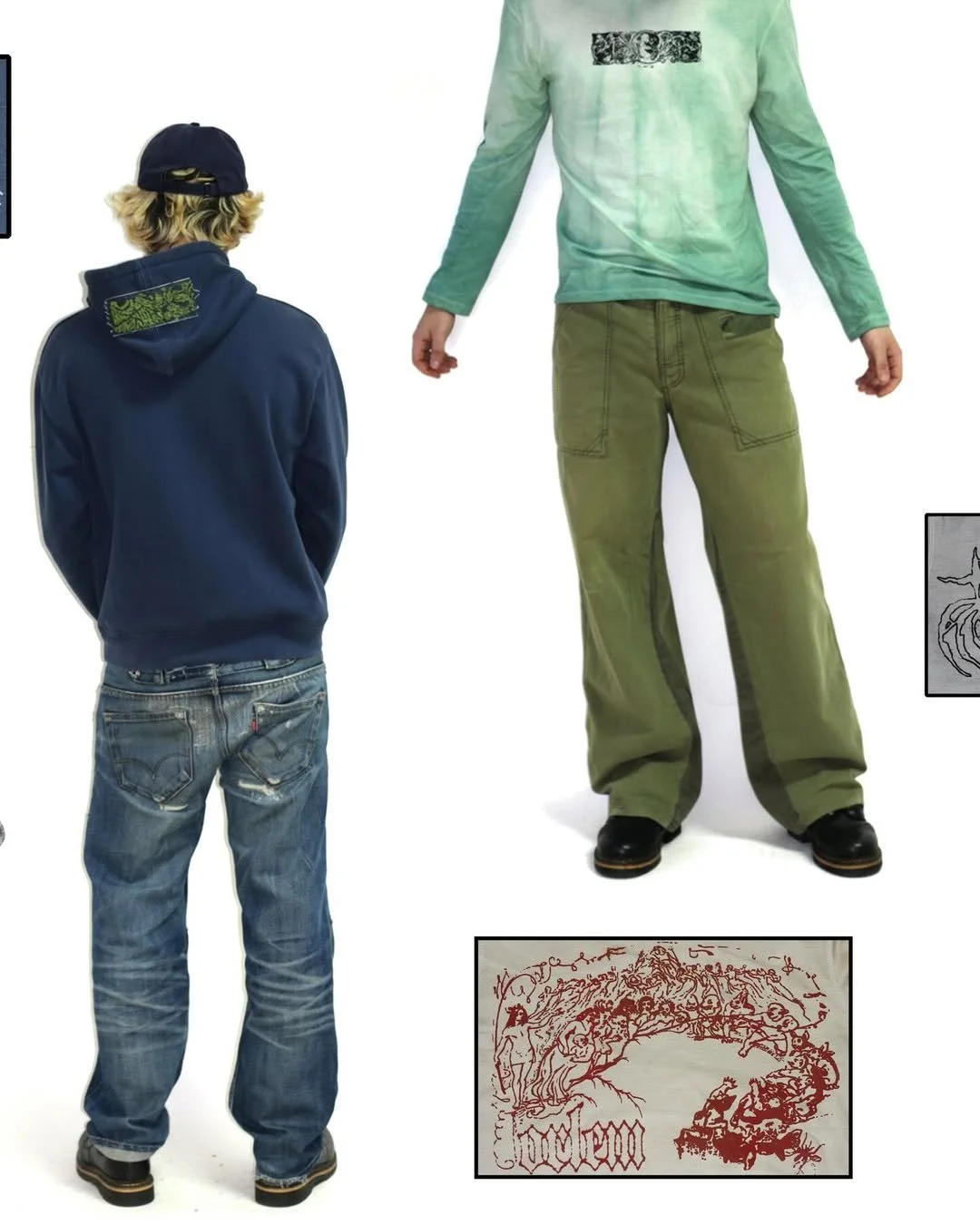
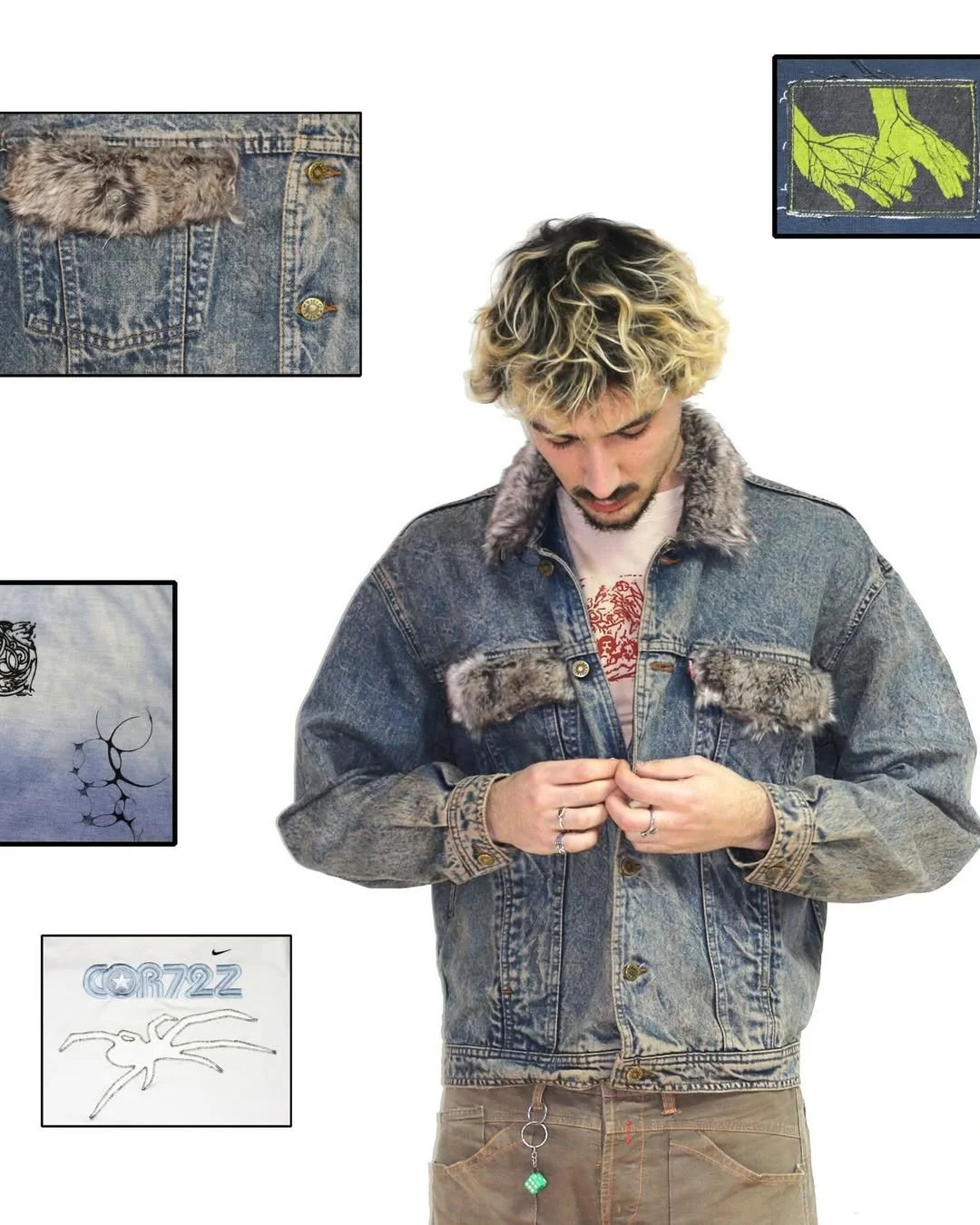
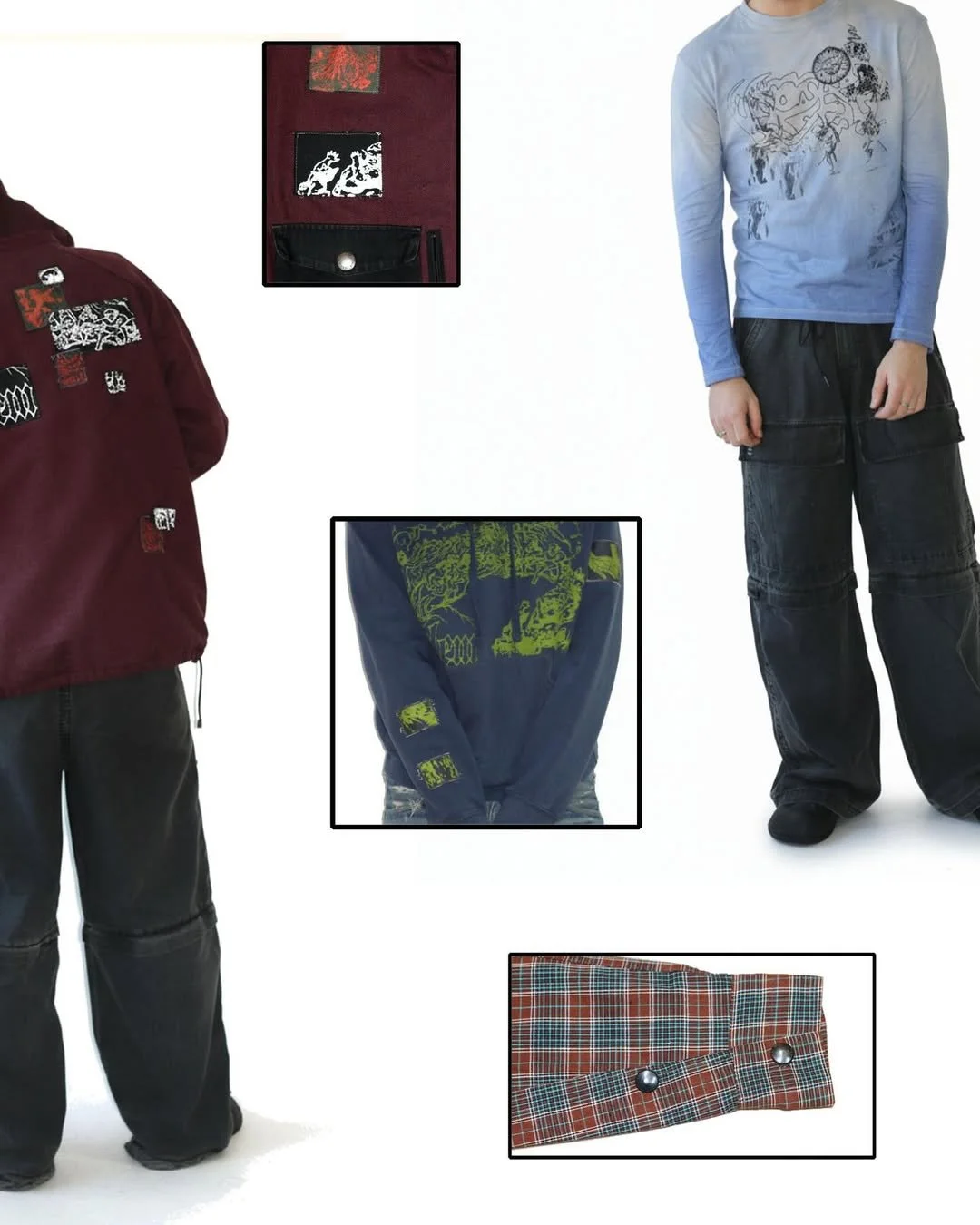
When it comes to upcycled pieces, there is something very organic about the way they are selected. Because of my love for thrifting and the habit of regularly visiting certain shops, many pieces emerge from that context. I look for items that need a new life: some can simply be worn second-hand, others have potential but require repairs or transformation. At other times, they come from donations by people who no longer wear those clothes.
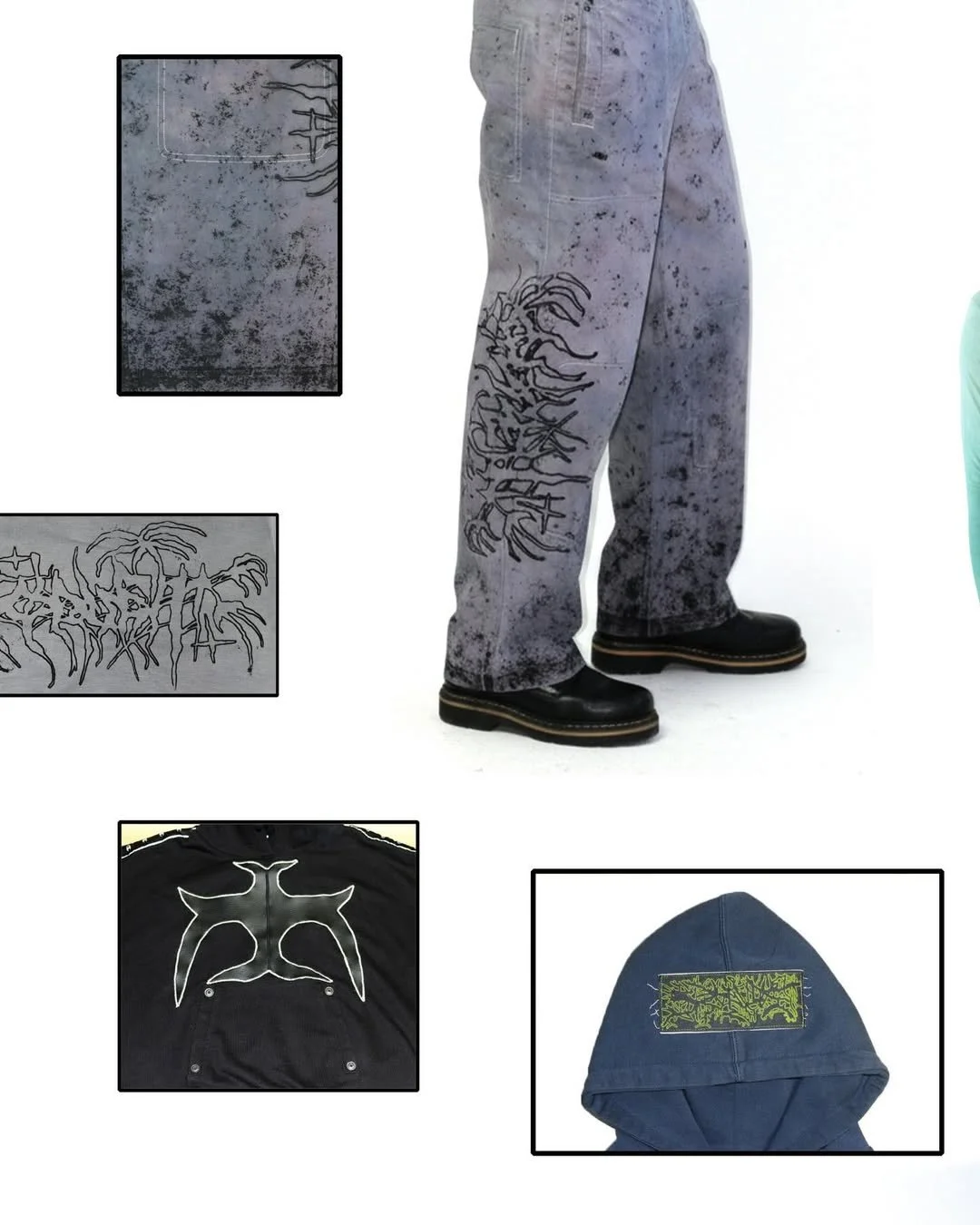
There is also a layer of reading the garment itself, where each item calls for a specific approach depending on its shape or imperfections. If it has stains, it may require embroidery or prints to cover them. If it’s too long, it might need cuts and hems to update the fit.
In the end, the goal is to create a complete, cohesive piece—one where part of the history and aura of each item remains visible, with good fabric quality, durability, and at the same time, more accessible pricing.
Orlem also develops collections and manufactured pieces, which involve a different process: learning how to create blanks with the desired proportions and fabrics, building relationships with national and international manufacturers, and going through significant investment, trial, and error.
Who or what do you draw your main inspiration from?
In terms of inspiration for design and style, I like to keep myself relatively free from direct references in order to create something more original and give space to my own ideas. Even so, I know that nothing is truly original - everything ultimately comes from a combination of influences processed by the subconscious.
That said, there are creators I deeply admire for the way they live, think, and build identity. As a brand owner, it’s hard not to mention Virgil Abloh - not so much for the products themselves, but for the transparent and organic way he built an empire out of friendships, mindset, and cultural vision, always striving to unite and uplift other creators rather than closing doors.
Still, my greatest inspiration has always been and will continue to be Austin Babbitt and his project Asspizza - a clear example of how hard work and dedication are the most important factors in any journey, and how it’s possible to build a community and offer something different to the public through a clothing brand.
In your pieces, we see a variety of techniques, from screen printing to painting. How does your creative process work?
The handmade touch in the pieces originated from one of my earliest hobbies: sneaker customization, fueled by my love for sneakers during the hypebeast era. As I accumulated techniques, the range of possibilities kept expanding.
I started with bleach painting, then discovered textile paints and printing with hand-carved linocut stamps. Later on, I invested in a sewing machine and, little by little, ended up setting up my own screen-printing studio. Reinvesting in the project has always been essential.
The creative process is a blend of the needs of each piece, the tools available, and the inspirations of the moment. The main source of inspiration for the artistic and graphic direction comes from nature - from the organic and the everyday.
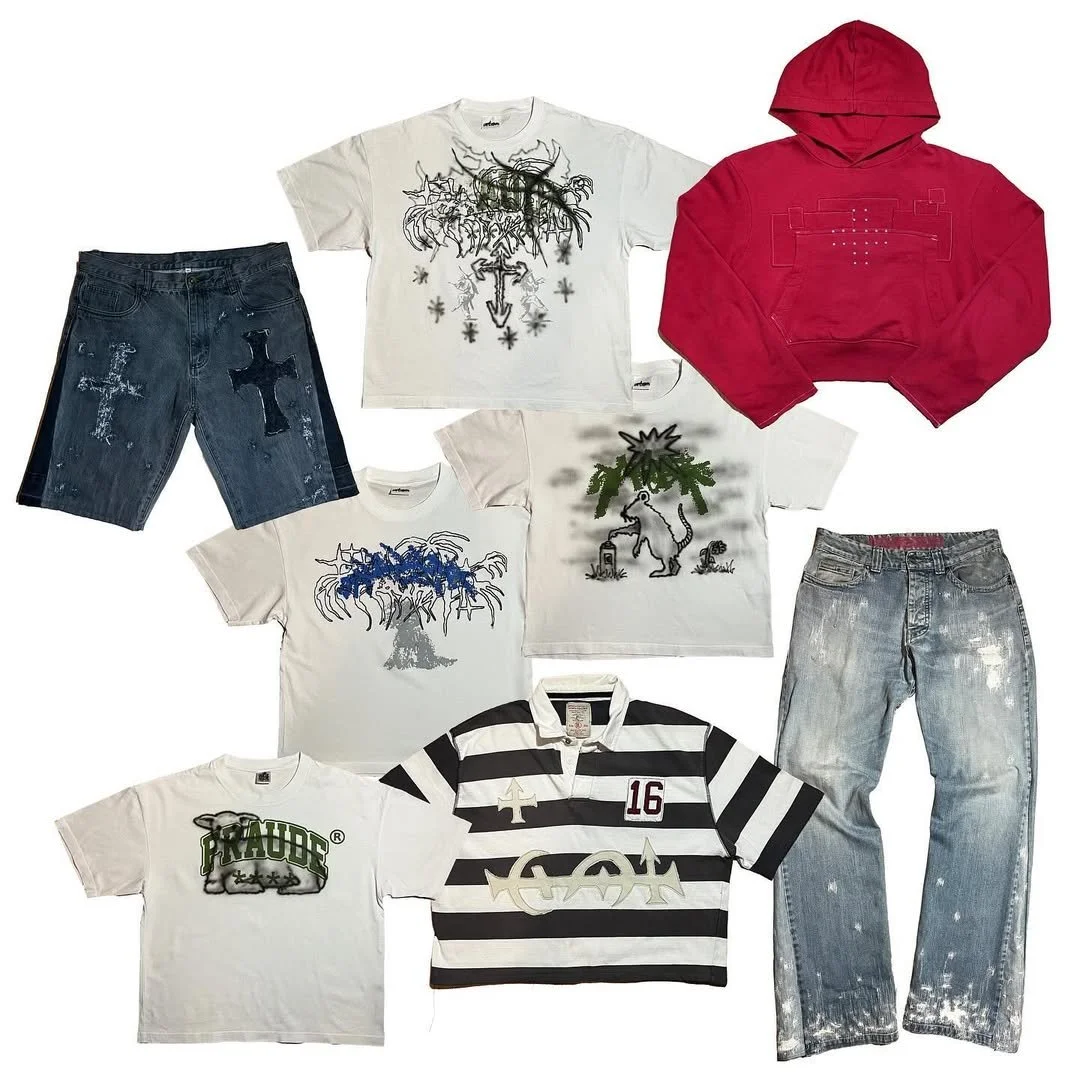

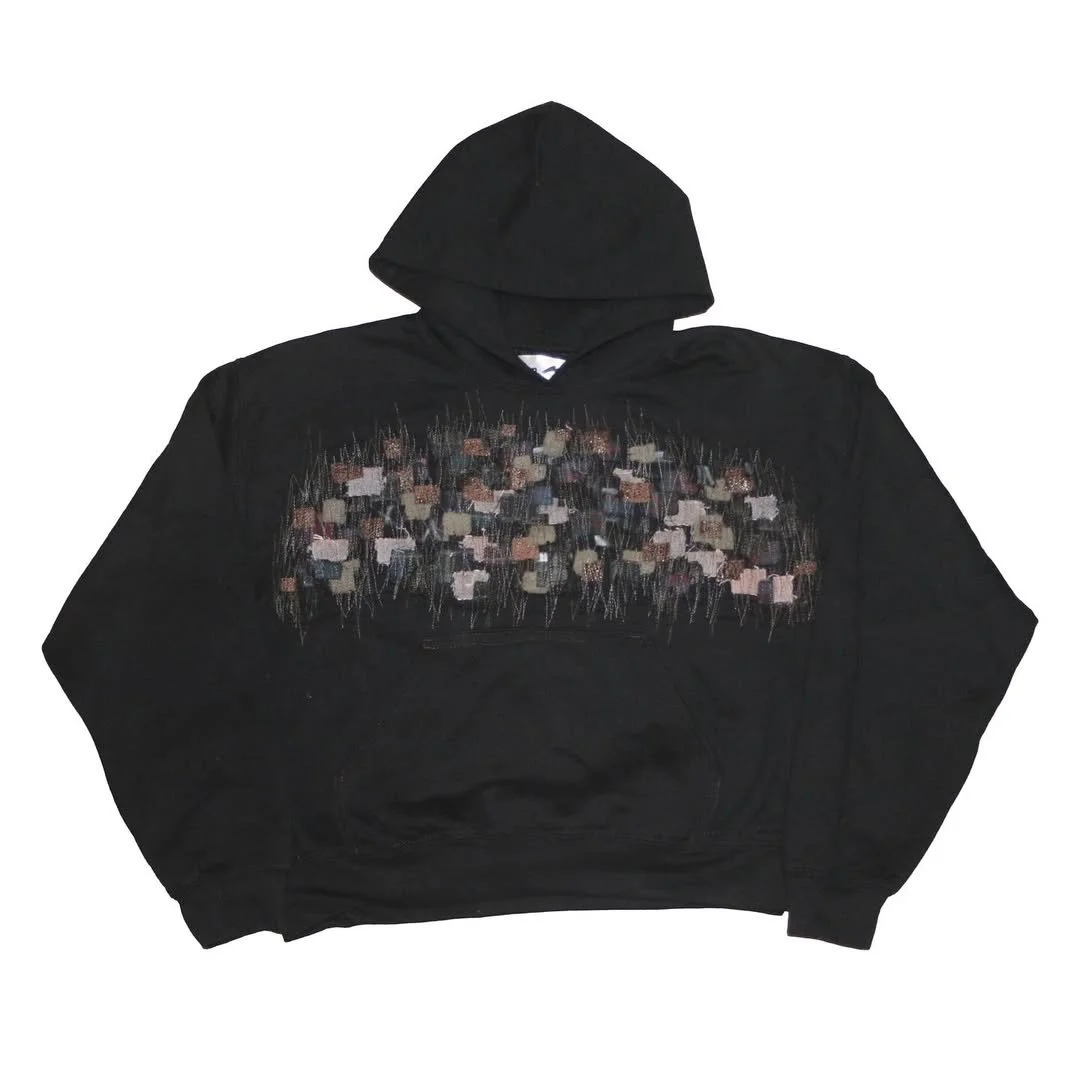
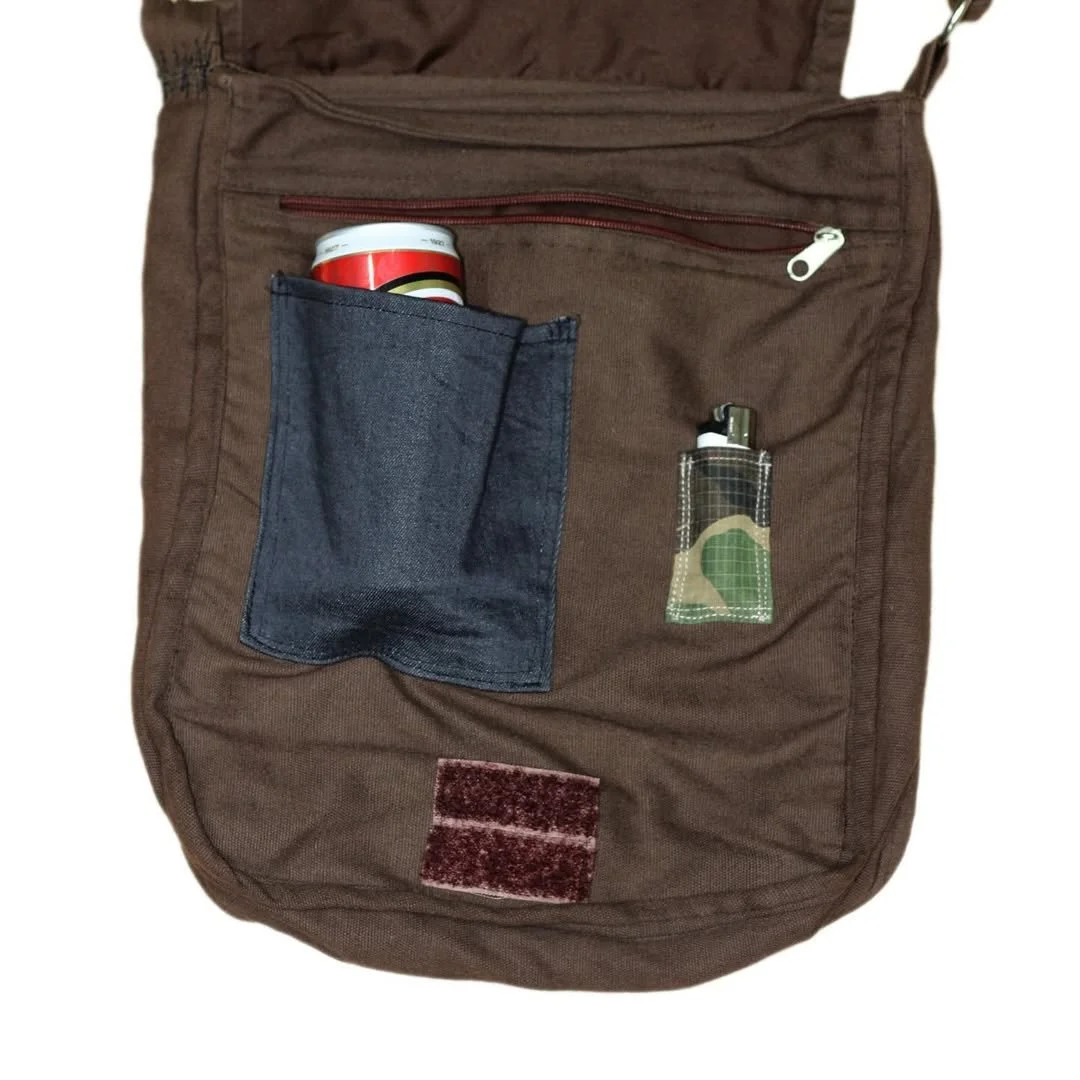
Is each piece designed individually, or is there a common thread connecting the drops?
Sometimes there is a specific idea for a piece, but in most cases each item follows its own unique process. There is also an inspiration that guides the photography and presentation of each drop.
As mentioned before, concept is always the common thread, even if it isn’t always fully explicit to the public. It exists between the lines and acts as fuel for every stage of a release.
Abroad, both 1-of-1 customization and second-hand fashion have been widely accepted for years. In Portugal, do you feel the market is finally more open to these ideas?
I believe these concepts emerge naturally as a response to a market saturated with mass production and defined by waste. Both internationally and in Portugal, even though customized pieces have existed for some time, there is still a certain stigma around them - often because they are more expressive and fall outside the norm.
Yet that is also the beauty of this medium. Personally, I believe this kind of work is part of the future of fashion, because in a world full of copies and mass creation driven purely by profit, the only way to have a truly unique wardrobe is by including singular pieces that naturally become more meaningful to each person. A one-of-a-kind piece is also less likely to be discarded.
This has always been one of Orlem’s goals: to help normalize these realities. I also have future plans to create a system that makes it easier to donate garments that are no longer worn, allowing them to be exchanged for unique items.
What are Orlem’s main goals for the near future?
Despite having around nine years of activity, I still feel that Orlem is at the very beginning, and I believe this year will be when the project’s true potential and intention become more visible.
In the near future, you can expect the brand’s first event—designed to be something not yet seen in Portugal - along with collaborations with international artists and several initiatives aimed at deeper community involvement and creating a stronger connection between the consumer and the piece.
One of these initiatives is Orlem on the Map, which will feature pieces hidden throughout the city, giving everyone the opportunity to get outside, explore, and discover special items.
A positive message to our community :)
We are at a cultural turning point where it is important for each of us to value our culture more, in our own way. Express yourselves, create, don’t be afraid to raise your projects and to fail as many times as necessary. Go to events, get involved, help others, and ask for help.
I am certain that Portugal has something truly special to offer, and that our country can become a landmark in fashion, art, and culture in the years to come.